
14 Blog Posts Found
Remote Sensing, Urban Heat Islands, and the Constructed Environment: Consequences for Urban Planning and Surveying in Africa
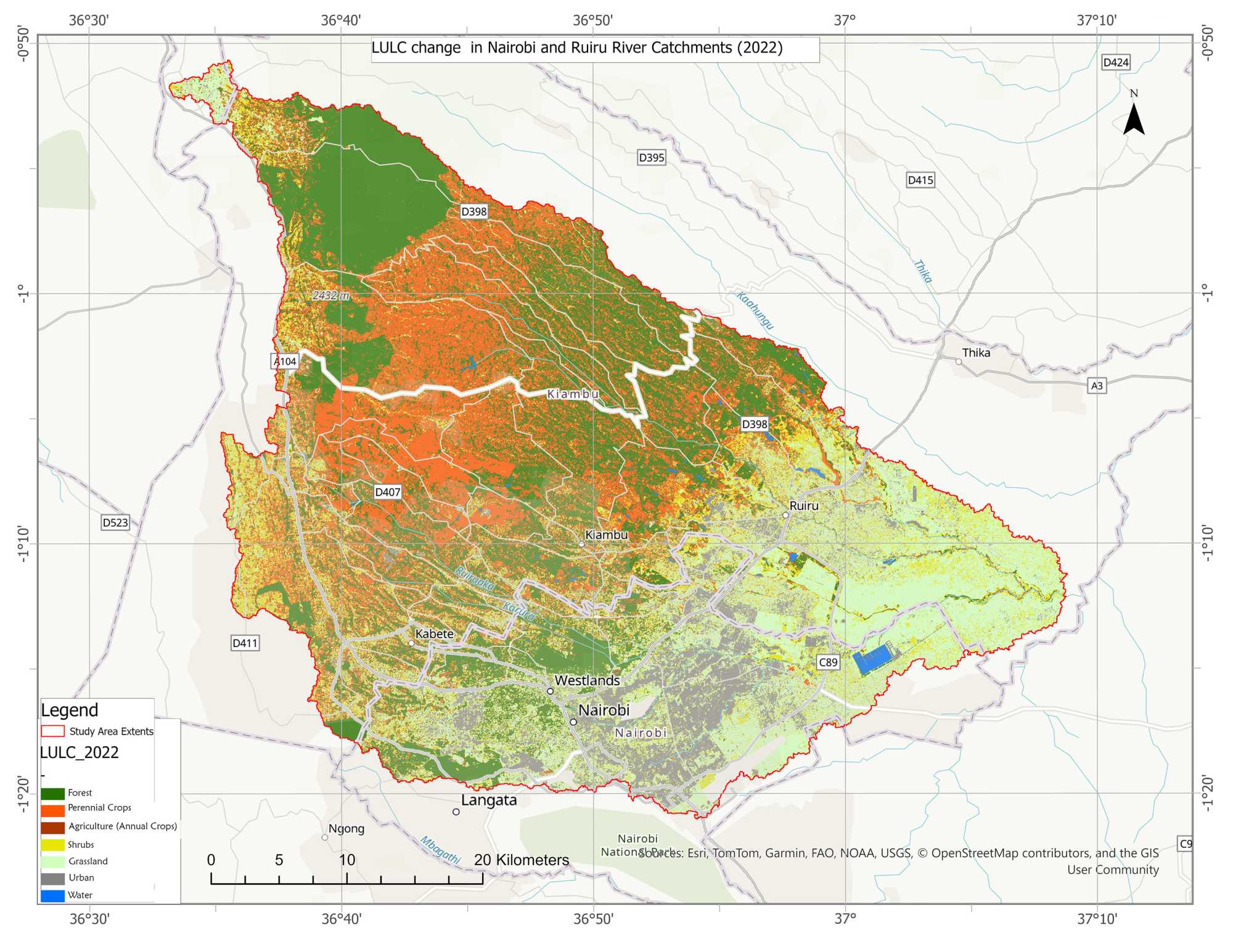
Posted on: Fri, May 22, 2026 | 8:51 amUrban heat islands (UHIs) are expanding through cities that are increasing quickly, making thermal stress, energy demand, and health inequities worse. It is now possible to measure the links between land use, built-up intensity, vegetation, and land surface temperature (LST) across long periods of time and huge areas using remote sensing and geographic information systems […]

Autonomous Horizons: Synergizing Drone Technology and Agentic AI for a Paradigm Shift in Kenya’s Land & Built Environment.
Posted on: Fri, May 22, 2026 | 8:42 amKenya’s land sector stands at an inflection point. With 60–90% of rural land undocumented and urban informal settlements housing millions without formal tenure, traditional surveying methods cannot meet the scale of demand. Simultaneously, the Ministry of Lands has committed to Artificial Intelligence (AI) and Machine Learning (ML) as core tools for modernizing land administration. This […]

Land and Built Environment: Reforming Land Governance in Kenya Through Cadastral Integrity, Digital Transformation, and Spatial Justice
Posted on: Fri, May 22, 2026 | 8:36 amLand and the built environment constitute the physical stage upon which human civilization unfolds. From the earliest settlements along fertile river valleys to contemporary megacities defined by glass skylines and digital infrastructure, the interaction between land resources and human construction has shaped economic productivity, social organization, cultural identity, and environmental sustainability. The land sector in […]

Challenges in Land Subdivision and Title Processing in Kenya: The Critical Role of Licensed Surveyors in Ensuring Secure Land Tenure
Posted on: Fri, May 22, 2026 | 8:27 amSecure land tenure is crucial for economic development, social stability, and investment in Kenya. However, land subdivision and title processing systems continue to face systemic challenges, including administrative bottlenecks, digitization gaps, technical survey issues, historical inconsistencies, and weak institutional coordination. These challenges result in procedural delays, disputes over ownership, and limited public trust in land […]
Socio-Economic Aspects of Land in Kenya
Posted on: Fri, May 22, 2026 | 8:22 amLand involves a wide range of rights and responsibilities. It is in demand by a wide range of users, institutions and interest groups for different and often conflicting reasons, for example, housing and livelihoods, access to credit, investment, cultural heritage, and political power. Competing claims over land often occur under conditions of unequal power and […]

Professional Resilience in the AI Era: Leveraging Artificial Intelligence to Enhance Structural Integrity and Engineering Surveying Practice in Kenya
Posted on: Fri, May 22, 2026 | 8:19 amRecent cases of building collapse in Kenya during construction have raised serious concerns regarding structural integrity, supervision failures, and lapses in quality control during planning and implementation stages. As infrastructure development accelerates, the role of engineering surveyors become increasingly critical in ensuring positional accuracy, deformation monitoring, grading compliance, and structural alignment. Simultaneously, Artificial Intelligence (AI) […]

Comparative Accuracy Assessment of GNSS and Total Station Surveying
Posted on: Fri, May 22, 2026 | 8:11 amModern surveying practice increasingly integrates satellite-based positioning with conventional optical instrumentation. Understanding the relative accuracy, efficiency, andoperational suitability of these techniques is essential for selecting appropriate tools in engineering and cadastral applications

Uncertainty In Land Markets Arising from Succession Processes in Kenya
Posted on: Fri, May 22, 2026 | 8:05 amCertainty of title is fundamental to the stability and liquidity of land markets. In Kenya, recent jurisprudence affirming that a registered title is only as valid as the process through which it was obtained has strengthened accountability within land administration. However, its application to succession-derived land has introduced structural uncertainty for third-party purchasers who rely […]

DATA ANALYTICS AND PROPERTY VALUATION IN KENYA
Posted on: Fri, May 22, 2026 | 8:00 amKenya’s real estate sector continues to expand especially within Nairobi and emerging metropolitan corridors. However, property valuation practice remains largely dependent on manual comparable analysis, fragmented transaction records and professional networks. At the same time, banks, regulatorS and institutional investors increasingly demand evidence-based defensible valuation reports. This article examines the practical role of data analytics […]

DATA CENTER VALUATIONS
Posted on: Fri, May 22, 2026 | 6:06 amBy: S.B.M.Wamae, Msc Project Management(JKUAT), B.A. Land Econ (Hons) UON, M.I.S.K, Registered Valuer.
12